
Your Pomsky’s grin is contagious, but the nonstop paw-licking, yeasty ears, and post-dinner puddles aren’t. Those year-round flare-ups often trace back to food sensitivities common in Husky-Pomeranian mixes. We sorted through veterinary studies, recall records, and real-owner stories to pinpoint nine diets that calm itchy skin, steady tummies, and restore double-coat shine. Keep reading to discover the limited-ingredient, hydrolyzed, or plant-based recipe that finally lets your Pomsky eat without scratching.
How we picked the winners
Choosing allergy-friendly food isn’t guesswork; it relies on proof. Here’s the filter each brand had to clear:

A structured, science-based playbook guided every dog food chosen for Pomskies with allergies.
- Must allow a true elimination trial. Every recipe had to support an 8- to 12-week novel- or hydrolyzed-protein diet and then hold up during the challenge phase, the veterinary gold standard for diagnosing food allergies.
- Five weighted criteria.
We scored each candidate on a 100-point rubric so flashy marketing never outranked science:
-
- Allergen avoidance & formula design (30 points)
- Nutritional completeness & veterinary oversight (25 points)
- Ingredient sourcing, recall record, label transparency (15 points)
- Price-to-value (15 points)
- Palatability, owner feedback & sustainability (15 points)
- Safety check. Brands that appeared in the FDA pet-food recall database within the past 24 months lost points or were removed altogether (see the Food and Drug Administration’s publicly available pet-food recall database).
- Real-world proof. We cross-referenced Pomsky forums, veterinary dermatology case notes, and Facebook groups to confirm that the numbers matched lived experience—cleaner ears, calmer skin, and firmer stools. If both data sets agreed, the food made our Top 9; if not, it was cut, no matter how pretty the package looked.
That’s the playbook behind every pick that follows.
One example comes from Bramble’s independent feeding trial with the University of Illinois, which compared its gently cooked plant-based recipes to a premium chicken-based kibble. Dogs eating the fresh Bramble meals showed protein and fat digestibility in the same high range as the meat-based food, along with lower cholesterol, triglycerides, and healthier gut microbiomes on lab work.
That level of third-party data helped push fresh, hypoallergenic options like Bramble fresh plant-based dog food onto this list for Pomskies who need a true elimination diet without sacrificing complete, AAFCO-level nutrition.
1. Bramble fresh plant-based dog food: the hypoallergenic heavyweight

Bramble Fresh Plant-Based Dog Food for Pomsky Allergies.
Imagine a shepherd’s pie for dogs—lentils, quinoa, peas, and sweet potato gently cooked and frozen the same day—exactly the kind of plant-based dog food board-certified veterinary nutritionists formulate to exceed AAFCO standards. That’s Bramble. By removing animal meat entirely, it sidesteps every top canine allergen at once: no chicken, beef, dairy, eggs, soy, or wheat.
Veterinary nutritionists designed Bramble to exceed AAFCO adult requirements, and Bramble’s 2023 independent digestibility trial found every essential amino acid well above target with more than 80 percent digestible. A single 16-ounce brick provides about 688 kcal and 12.5 percent protein as-fed (roughly 36 percent dry matter)—plenty for zoom-happy Pomskies.
Owners notice the change first in the paws and ears: less licking, less yeast smell, a shinier coat. Convenience also matters; Bramble arrives in pre-portioned bricks, ready to thaw overnight, scoop, and serve. It falls in the $ price tier, but many readers say one subscription costs less than a month of Apoquel.
Snapshot: fresh-frozen casserole format; protein from peas, chickpeas, quinoa; free of all animal tissue, soy, wheat, and corn; best for Pomskies reacting to multiple meats or fillers.
If your dog has bounced from salmon to venison with no relief, starting truly fresh can feel liberating. Bramble offers that reset and a lighter carbon paw-print, so you and your vet can finally put the itch to rest.
2. Wild Earth vegan kibble: clean protein for sensitive stomachs

Wild Earth Vegan Kibble for Sensitive Pomsky Stomachs.
Bramble covers fresh meals; Wild Earth supplies the crunch. Its headline ingredient is dried nutritional yeast, a single-cell protein that provides all 10 essential amino acids and rivals meat for digestibility. Wild Earth’s Performance Formula delivers 28 percent protein and 346 kcal per cup while meeting AAFCO maintenance standards.
Digestive extras add value. Chickpeas and oats bring prebiotic fiber, and algae oil contributes DHA for skin and brain health. The recipe skips corn, wheat, soy, and every animal ingredient, making it a safe pick for dogs that flare up on poultry or beef.
Pet-parent reports echo the lab data; many notice firmer stools and cleaner ears by the end of the first 28-pound bag, likely due to the yeast’s beta-glucans and the absence of hidden meat proteins. Bags ship shelf-stable, so you get plant-based simplicity without freezer space.
Snapshot: dry kibble; protein from yeast and chickpeas; free of animal tissue, wheat, corn, soy; mid-tier $ pricing; ideal for dogs that crave crunch but need a meat-free reset.
Scoop, serve, and let your Pomsky’s stomach and conscience stay calm.
3. Purina Pro Plan sensitive skin & stomach: budget-friendly relief

Purina Pro Plan Sensitive Skin & Stomach Salmon and Rice Dog Food.
Allergy care doesn’t have to cost boutique prices. Purina’s salmon and rice formula skips corn, wheat, and soy yet usually costs about $55 for a 30-lb bag, roughly $1.80 per pound at major U.S. retailers in 2025.
Why it helps
- Twenty-six percent protein from real salmon supplies anti-inflammatory omega-3s; oatmeal and rice soothe irritable guts; Purina’s Guaranteed Live Probiotics (Bacillus coagulans) stay viable through cooking to firm loose stool.
- Formulated for all life stages, so you can feed one bag from gawky puppy through zoomie-happy adult.
- Key numbers: 26 percent protein, 16 percent fat, 467 kcal per cup; no artificial colors or flavors.
Pet parents often see firmer stool within 7 to 10 days and shinier coats by week four, results likely tied to the blend of fish oil (EPA and DHA) and prebiotic fiber. Because you can find it at most grocery or pet stores, refills never derail your allergy plan.
Snapshot: dry kibble; protein from salmon and fish meal; free of corn, wheat, soy, poultry by-products; single-$ price tier; ideal for mild-to-moderate sensitivities when budget matters.
Bag in cart, slow transition, itch-free Pomsky without emptying your wallet.
4. Natural Balance L-I-D sweet potato & fish: simplicity that soothes
When you need a diet stripped to the studs, this recipe sticks to salmon, menhaden fish meal, and sweet potato, plus the vitamins and minerals every dog needs. Fewer variables mean faster detective work: if your Pomsky calms down on this food, you have likely ruled out both salmon and sweet potato as triggers.
Nutrient snapshot: 24 percent protein, 10 percent fat, and about 345 kcal per cup; meets AAFCO adult standards.
Why it helps
- Fish-based omega-3s soothe inflamed skin, while sweet potato’s soluble fiber firms stool without the glycemic spikes some grains cause.
- Clean label: zero chicken, beef, dairy, corn, wheat, or soy, common culprits in Husky mixes.
Many Northern-breed owners report cleaner ears and less paw-licking by the time a 26-pound bag runs out; the mild scent also wins over picky eaters during strict elimination trials.
If you want a no-prescription, no-guesswork reset, scoop Natural Balance L-I-D into the bowl and watch your Pomsky’s skin respond.
5. Wellness Simple grain-free turkey & potato: the single-protein safety net
When chicken triggers flare-ups, turkey often ends them. Wellness Simple keeps the recipe truly limited: deboned turkey, turkey meal, potatoes, and peas provide the calories; everything else is vitamins, probiotics, and flax.
Why it works
- One lean turkey protein gives your Pomsky’s immune system little to fight.
- Flaxseed supplies omega-3s; owners often see hot spots cool within a month.
- Four live probiotic strains plus chicory root deliver 20 million CFU per pound to keep stools firm during the switch.
Key numbers: 26 percent protein, 12 percent fat, about 396 kcal per cup; meets AAFCO adult maintenance standards. The recipe drops chicken, beef, dairy, corn, soy, eggs, and every grain.
Many readers report armpit itch easing in two weeks and that lingering ear odor gone by the first reorder, all without losing zoomie energy.
If you want mainstream availability without multi-meat guesswork, pour Wellness Simple. Turkey in, drama out.
6. Taste of the Wild Pacific Stream: omega-rich, chicken-free crunch
Northern breeds thrive on fish, and their Pomsky offspring are no exception. Pacific Stream replaces poultry with smoked salmon and ocean-fish meal, delivering 25 percent protein, 15 percent fat, and 0.3 percent omega-3s—figures comparable to some prescription skin diets.
Why it helps
- All fish, no fowl: removing chicken cuts out the most common canine protein allergen.
- Salmon oil boosts EPA and DHA, nutrients vets reach for when coats look dull.
- Sweet potato and peas replace grain, offering steady energy without wheat or corn.
- Low-temperature extrusion preserves probiotics to settle gas in a few days.
Budget bonus: a 28-lb bag averages $52 in 2025, about $1.85 per pound, so you can feed fish year-round without sticker shock.
Snapshot: dry kibble; protein from salmon and ocean fish; free of poultry, grain, corn, soy, dairy; single-$ price tier; ideal for chicken-allergic Pomskies needing extra omega-3.
If your dog’s coat looks tired, pour Pacific Stream and let salmon’s natural shine therapy work. One month in, brushing feels more show dog than fluff tornado.
7. Zignature turkey limited ingredient: one protein, zero compromises
Zignature pares kibble to the essentials: turkey first, then peas, chickpeas, and sunflower oil. No chicken fat sneaks in, no rendered mystery meals, and no grain in sight.
Numbers first
- 32 percent protein, 14.5 percent fat, 395 kcal per cup; dense enough for active Pomskies, so measure portions carefully.
- Omega-3s 1.0 percent and omega-6s 4.0 percent; taurine supports heart health.
Why it helps
- One animal protein shortens elimination trials; if itching fades, you can green-light turkey.
- Sunflower oil delivers linoleic acid, often low in allergic dogs, to speed coat repair.
- Added probiotics keep digestion steady during the switch.
Owners say picky eaters warm up fast thanks to the roasted-turkey aroma; just weigh each meal because the calorie density can add up.
Snapshot: dry kibble (matching canned option available); protein from turkey and turkey meal; free of chicken, grain, corn, soy, dairy; mid-tier price; ideal for strict elimination diets that still need high protein.
If fish and plant proteins have failed, move to Zignature. One bag offers the ingredient control of a prescription diet without the prescription.
8. Earthborn Venture rabbit & pumpkin: extreme limited, legume-free relief
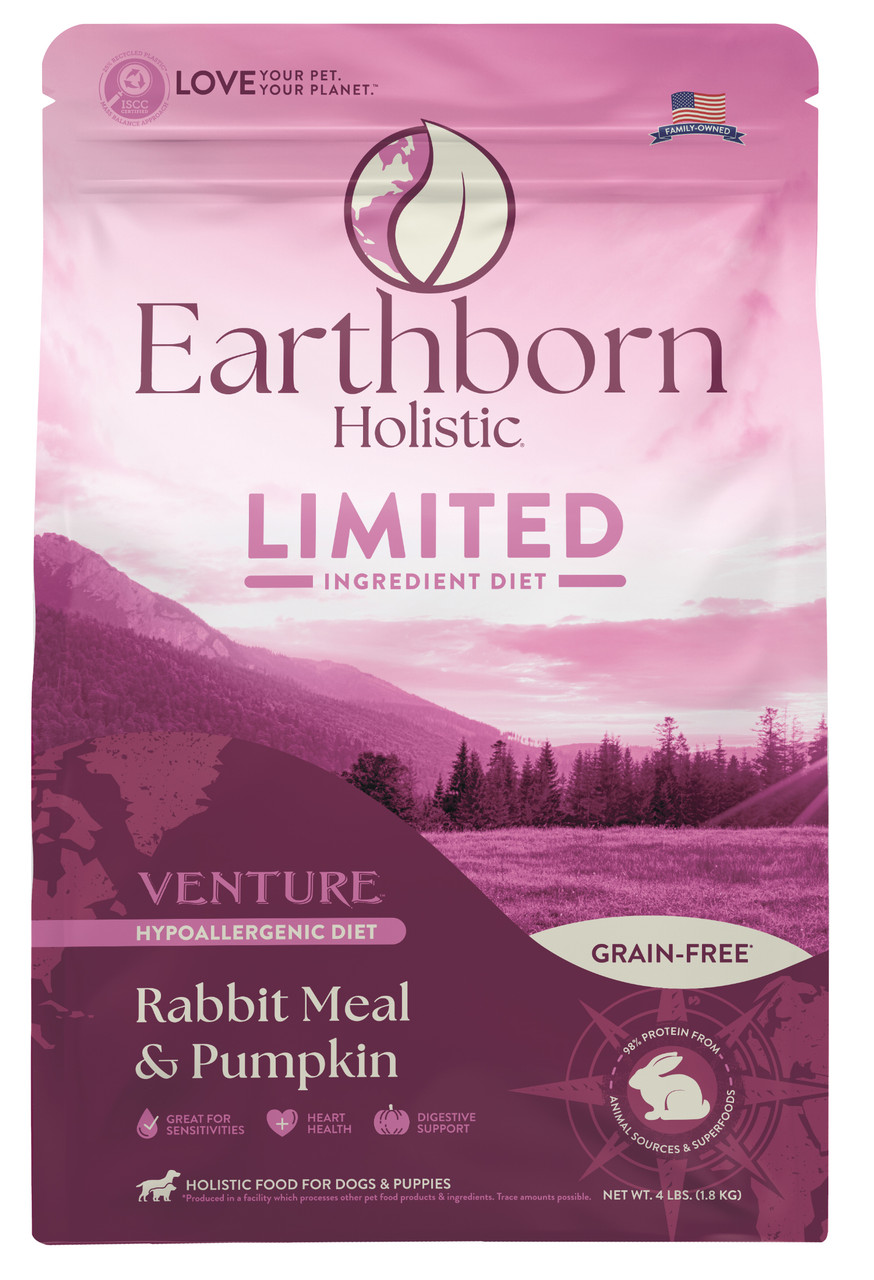
Earthborn Venture Rabbit & Pumpkin Limited Ingredient Dog Food.
When salmon, turkey, and even venison fail, go truly exotic. Venture Rabbit & Pumpkin removes not only common meats but also peas, lentils, and potatoes. The ingredient list fits on a Post-it: rabbit meal, pumpkin, tapioca, sunflower oil, vitamins, and minerals.
Numbers first: 26 percent protein, 13 percent fat, 345 kcal per cup, plus taurine and L-carnitine to guard heart health. Formulated to AAFCO all-life-stage standards (except large-breed puppies).
Why it helps
- Novel protein: most U.S. dogs have never tasted rabbit, so the immune system stays calm.
- Pumpkin’s soluble fiber firms stool and feeds beneficial bacteria, a win for Pomskies juggling itchy skin and unpredictable digestion.
- No legumes, no grains: excludes ingredients flagged in past DCM discussions while keeping starch low.
- A QR code on each bag links to supply-chain and lab results.
Dermatology clinics often try Venture before prescription diets because a single bag usually shows whether true food freedom is possible.
Snapshot: dry kibble; protein from rabbit meal; free of chicken, beef, grain, legumes, potato, soy; $ tier; ideal when every other protein fails.
If your vet suggests hydrolyzed kibble and you would rather stay OTC, start here. Rabbit could be the white-whiskered hero your Pomsky’s skin has been waiting for.
9. Nom Nom fresh pork potluck: custom meals, clear results
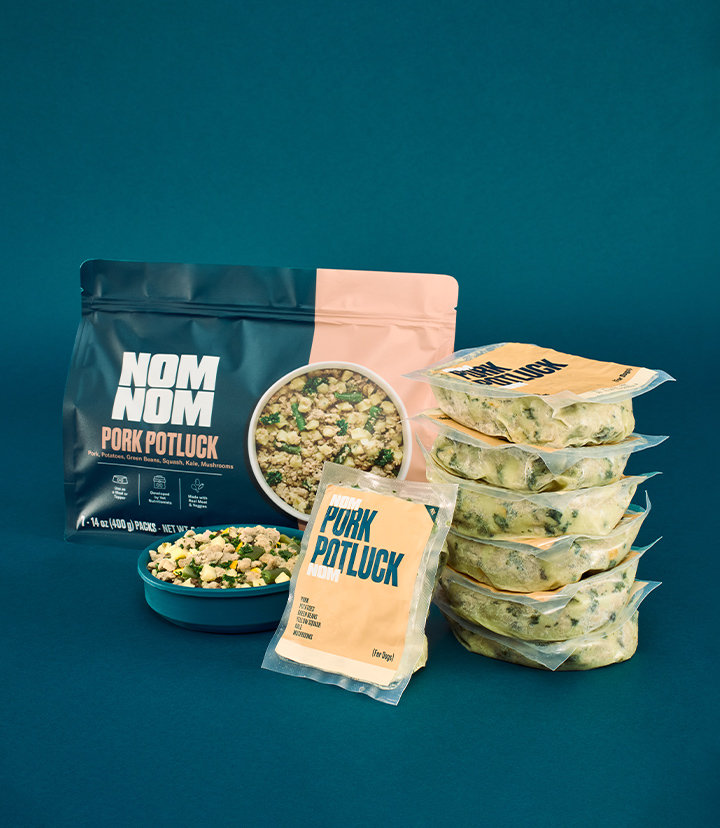
Nom Nom Pork Potluck Fresh Dog Food for Pomskies.
Want home-cooked quality without the kitchen math? Nom Nom’s Pork Potluck comes from board-certified nutritionists and cooks at 165 °F, low enough to protect nutrients, high enough to remove pathogens. One recipe, one novel protein: ground pork with russet potatoes, green beans, squash, kale, and a touch of fish oil.
Numbers to know
- 1,246 kcal/kg (about 177 kcal per half-cup pack) and 7 percent protein as-fed (about 28 percent dry matter); meets AAFCO all-life-stage standards.
- Meals arrive portioned to your Pomsky’s weight and activity level, so every gram counts during an elimination trial.
Why it helps
- Gentle cooking improves amino-acid and vitamin availability compared with high-heat kibble.
- High moisture (around 75 percent) supports skin hydration from the inside, perfect for dry climates.
- Tailored plans: an intake quiz flags allergens, and Nom Nom leaves them out before the first shipment.
In a four-week internal study, 48 percent of healthy dogs showed a shinier coat and 58 percent passed smaller, firmer stools after switching to Nom Nom diets, a promising sign for already-itchy Pomskies.
Cost averages $4–$6 per day for a 25-lb dog (autoship discount included). Many owners say the savings on allergy meds offset the difference.
Snapshot: fresh-cooked packs; pork as sole animal protein; free of chicken, beef, dairy, wheat, soy; top-tier pricing; ideal when you want recipe precision without DIY cooking.
If you have promised your Pomsky the moon and the itch remains, let Nom Nom take over dinner duty—fresh science in a pouch.
How to tell food allergies from everything else
Scratching doesn’t always mean supper is to blame. Use these three clues before you overhaul the bowl:
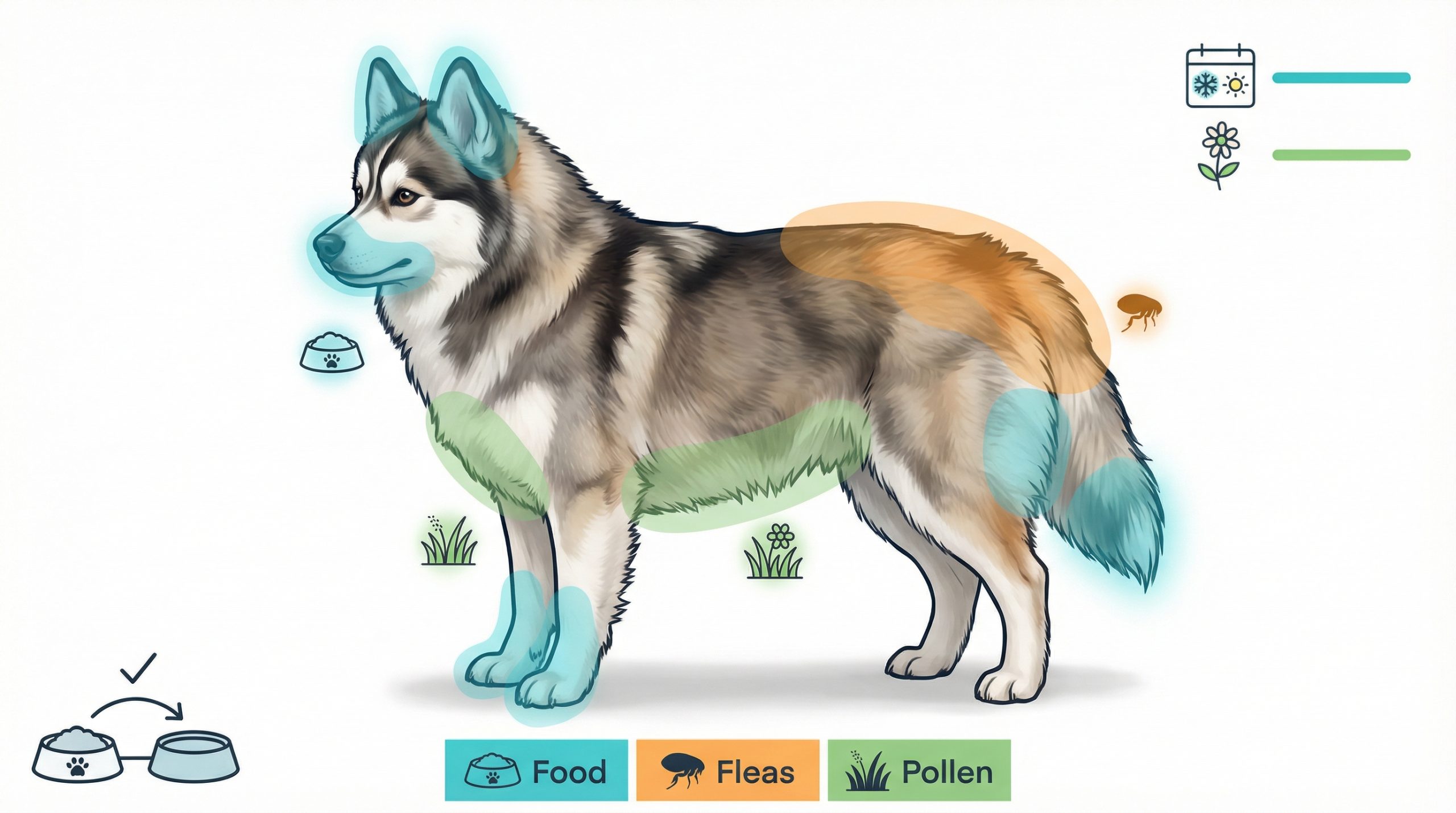
Food, flea, and environmental allergies tend to itch in different places on your Pomsky’s body.
- Timing. Food reactions itch 12 months a year; pollen and mold usually flare only in spring or fall. If your Pomsky still chews her paws when the snow falls, diet moves higher on the suspect list.
- Target zones. Food allergies favor the ears, paws, muzzle, and rear and often bring digestive extras like soft stool or midnight gas. Flea bites cluster over the lower back and tail base, while grass pollen can redden the belly and armpits.
- The elimination tie-breaker. When signals overlap, veterinarians use an 8- to 12-week novel- or hydrolyzed-protein elimination diet followed by a food challenge. Clear skin after the trial, plus a flare when the old food returns, confirms the diagnosis.
Match your Pomsky’s pattern against those checkpoints before buying a new bag. You will save time, money, and frustration by chasing the right culprit from day one.
Transitioning to a new diet without upsetting tiny tummies
A sudden switch can trade itchy skin for midnight diarrhea. Most veterinarians recommend a one-week hand-off that lets gut bacteria adjust gradually:

Follow a simple seven-day schedule to switch your Pomsky to a new allergy-friendly food without tummy trouble.
| Day | New food | Old food |
| 1–2 | 25 percent | 75 percent |
| 3–4 | 50 percent | 50 percent |
| 5–6 | 75 percent | 25 percent |
| 7 | 100 percent | — |
Follow the schedule and skip flavored treats or chews that might hide chicken fat, so your Pomsky tastes only the test diet and the results stay clear.
Pro tips
- Warm fresh food to room temperature to deepen aroma for picky eaters.
- If stools soften, stir in a tablespoon of plain canned pumpkin; its soluble fiber firms things up without adding allergens.
- Keep water bowls topped off, because higher protein or fiber can raise thirst and hydration smooths digestion.
Give the new food a fair audition. Skin cells renew slowly, so check progress at six weeks, not six days. Weekly photos of ears, paws, and coat help you spot subtle wins you might otherwise miss. Patience now prevents future setbacks.
Frequently asked questions
Yes, if the food is nutritionally complete.
Several peer-reviewed trials show adult dogs maintain normal weight, bloodwork, and bone density on balanced vegan diets that meet AAFCO profiles. In a 2023 randomized study, 61 dogs fed an extruded plant-based kibble for 12 weeks kept stable body composition and vitamin D levels while cholesterol dropped within the normal range. The critical factor is formulation: look for added taurine, methionine, and L-carnitine plus an amino-acid guarantee. Brands such as Bramble and Wild Earth publish those profiles and work with veterinary nutritionists, so your Pomsky’s muscles accept protein that sprouted instead of mooed.
Not proven, still under study.
The FDA’s December 23, 2022 update states it has “not established a causal relationship” between grain-free diets and dilated cardiomyopathy (DCM) in dogs, although many reports involve foods rich in peas, lentils, or potatoes.
Risk management
- Choose brands that add taurine or methionine and keep legumes outside the first five ingredients.
- If you prefer zero risk, pick a grain-inclusive formula such as Purina Pro Plan Sensitive Skin & Stomach or Farmina Ancestral Grain.
- Schedule an echocardiogram or blood taurine test every 6–12 months if your Pomsky eats a grain-free diet and belongs to a breed predisposed to DCM.
Bottom line: Current evidence does not say grain-free equals heart disease, but smart formulation and regular cardiac checks keep you ahead of the curve.
Digestive wins first, skin wins later.
- Firmer stool and less gas often appear within 3–7 days once the old protein leaves the gut.
- Expect visible coat and skin improvement after 6–8 weeks, the time it takes for new hair shafts to replace inflamed ones per veterinary dermatology guidelines.
- Use weekly photos plus a one-line symptom log to catch gradual change.
If you see no progress by week 10, call your vet; a hydrolyzed prescription diet or a different novel protein may be next.
Keep treats on-brand with the trial.
During an elimination diet, every bite must match the test food’s protein and carb sources. The simplest route is to use the new kibble as training rewards or bake teaspoon-sized cubes of the matching canned formula at 250 °F for 30 minutes.
Need variety?
- Fresh or dehydrated single-ingredient options (sweet-potato coins for vegan plans, freeze-dried turkey for turkey trials) work as long as they mirror the main protein.
- Keep treats at no more than 10 percent of daily calories to avoid unbalancing the diet, a threshold set by veterinary nutritionists.
- Skip rawhides and flavored dental chews; many are basted in chicken or beef broth and can reset the clock on your trial.
Matching ingredients keeps the detective work honest, and your Pomsky’s progress easy to read.
Usually no.
Balanced allergy diets already supply the zinc, biotin, and omega-3s most Pomskies need. The one add-on many dermatologists recommend is plain fish oil (anchovy or sardine source):
- Dose: 20–55 mg combined EPA + DHA per pound of body weight daily, the range published by the National Research Council and echoed in recent veterinary reviews.
- Read the label for flavorings; “beef” or “chicken” aroma can restart your elimination trial.
Skip multipurpose “skin and coat” chews unless your vet finds a deficiency on bloodwork; most are pricey mixes of nutrients already covered by your new food.
Conclusion
Your Pomsky’s happiest, itchiest-free days hinge on the right bowl of food. Whether you test a plant-based reset, a fish-forward formula, or a single-protein kibble, follow a slow transition and keep treats consistent so the results speak clearly. With patience and the options above, you can swap scratching for zoomies and watch that double coat shine again.
The right allergy-friendly food can turn nonstop scratching into zoomies and a glossy Pomsky coat.
