
.svg)
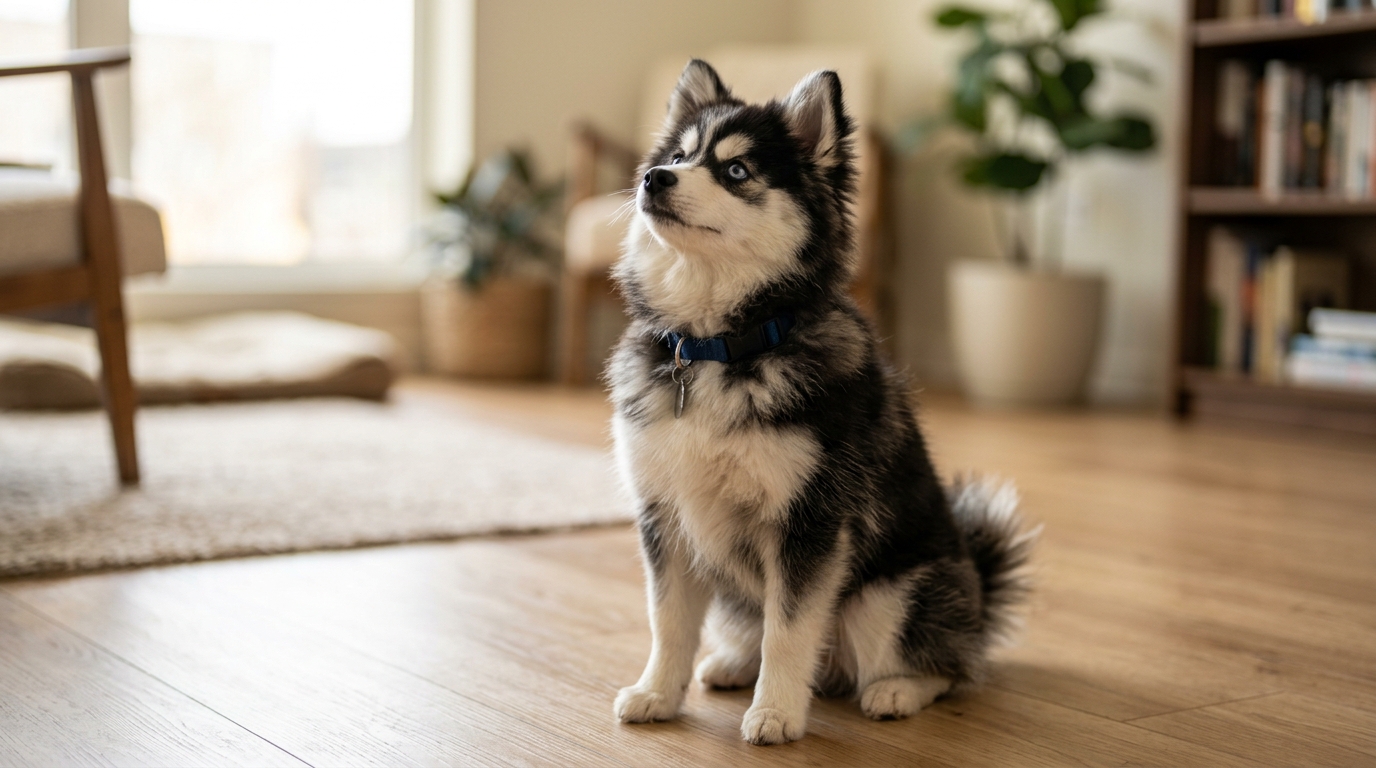
Pomskies inherit the Husky's energy and the Pomeranian's cleverness, which makes them a joy to live with but also a handful if their needs aren't met. Three behaviors trip up most Pomsky owners: hyperactivity, chewing, and pulling on the leash. The good news is all three are fixable with consistent, positive-reinforcement training.
Here's how to work through each one.
1. Managing Pomsky Energy and Hyperactivity
Pomskies have more energy than their small size suggests. Physical exercise alone isn't enough. They also need mental stimulation to burn off that drive, otherwise it comes out as barking, chewing, or digging.
Daily mental stimulation ideas:
• Obedience basics (sit, stay, come, down) - short 5-10 minute sessions a few times a day
• Advanced tricks (spin, roll over, high-five) - tires their brain even faster than their body
• Puzzle feeders and treat-dispensing toys - make them work for meals
• Snuffle mats - great for sniffing-based brain work
• Frozen stuffed Kongs - peanut butter, yogurt, or wet food frozen inside keeps them busy for 30+ minutes
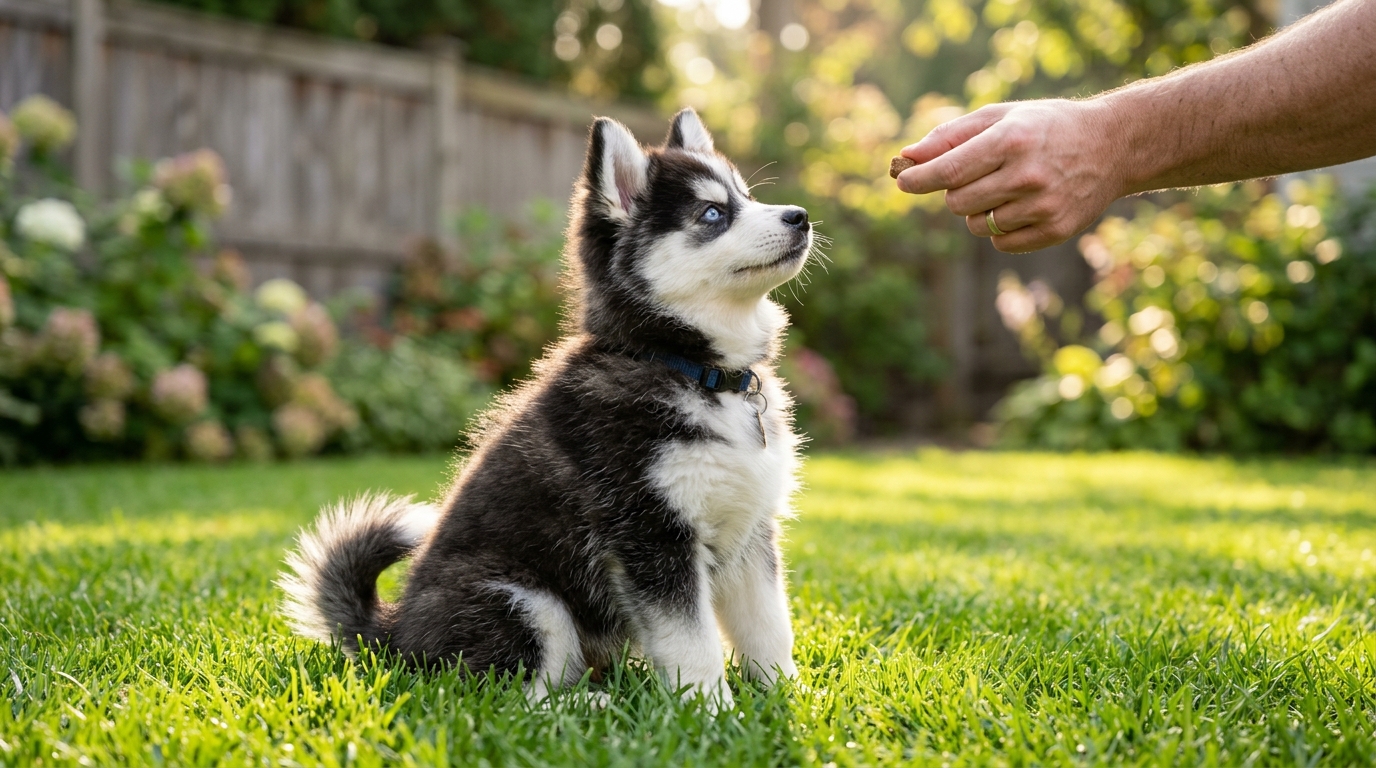
Important tip: Never reward hyper behavior with attention. If your Pomsky jumps on you when you come home, ignore them until they calm down, then reward the calm. Giving attention during excitement teaches them that jumping gets them what they want.
A tired-brain Pomsky is a well-behaved Pomsky.
2. Stopping Pomsky Chewing
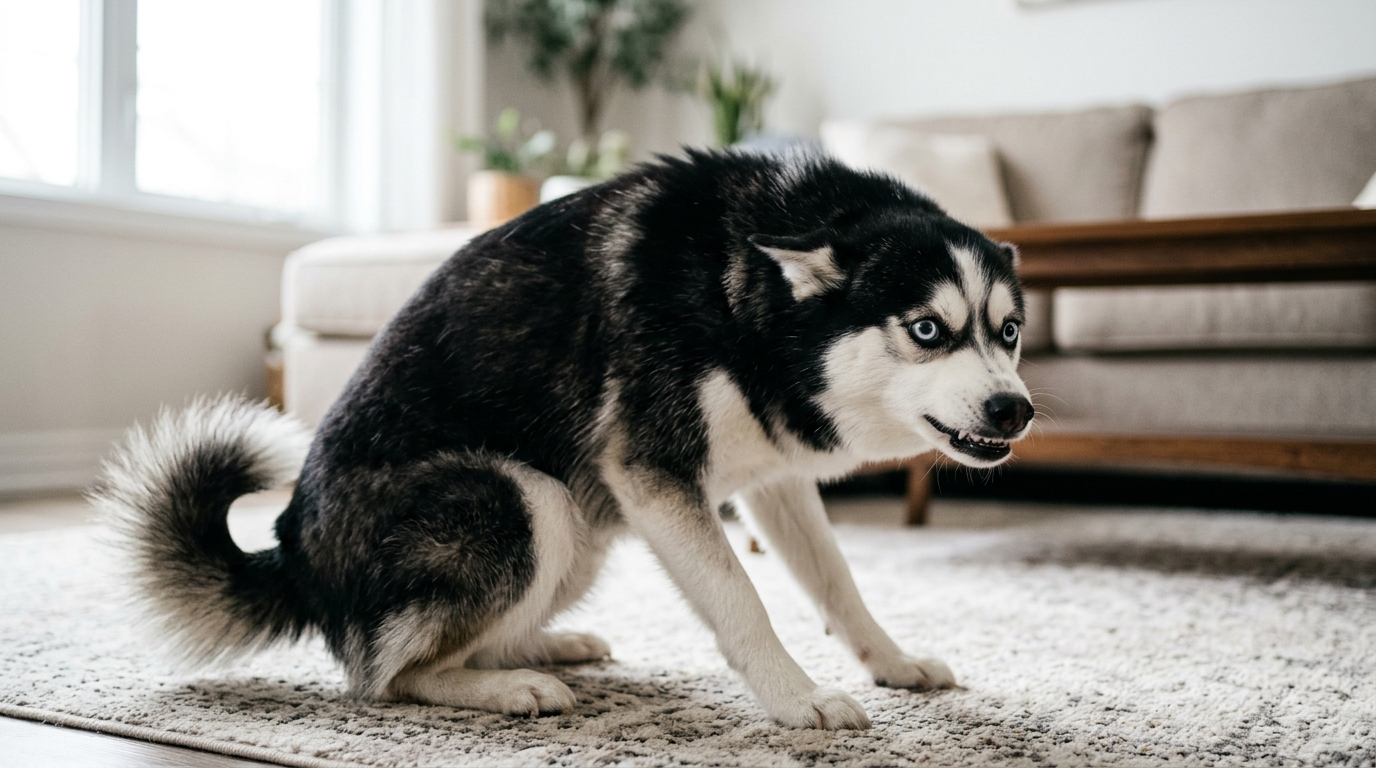
Chewing is normal, especially during the puppy teething stage (3-6 months). But if your Pomsky is chewing shoes, furniture, or wires, it usually means one of three things: boredom, anxiety, or lack of appropriate chew outlets.
How to redirect chewing:
• Provide plenty of acceptable chew options - Kong toys, bully sticks, rope toys, frozen carrots
• Rotate toys weekly so they stay interesting
• Puppy-proof your space - put shoes, cords, and valuables out of reach
• Use a crate or playpen when you can't supervise, especially for puppies
When you catch them chewing something they shouldn't:
1. Calmly interrupt (don't yell)
2. Trade them for an acceptable chew item ("drop it, here's your Kong!")
3. Reward them for taking the right item
Never punish after the fact. Dogs don't connect a scolding to the chewing they did an hour ago.
When Should I Worry About Pomsky Chewing?
If your Pomsky is destructive mainly when left alone, it may be separation anxiety rather than normal chewing. Signs include: pacing before you leave, destruction near doors or windows, excessive drooling, or barking the whole time you're gone. Talk to a certified trainer (CCPDT or IAABC) or your vet about anxiety-specific solutions.
3. Teaching Your Pomsky to Walk on Leash
The Husky side of your Pomsky was literally bred to pull a sled, so leash pulling is instinctive. The good news is it can be unlearned with patience.
Before you start outside:
1. Let them wear the collar around the house for a few days
2. Clip the leash on and let it drag so they get used to the weight
3. Pick up the leash and practice walking inside with treats
Make the leash feel positive before you ever hit the sidewalk.
The "stop method" for pulling:
• Every time your Pomsky pulls, stop walking immediately
• Wait until the leash is slack (they turn around or sit)
• Then start walking again
This teaches them that pulling = no forward motion, while a loose leash = we keep going. Takes a few weeks of consistency but works reliably.
Gear that helps:
• Front-clip harness (redirects pulling momentum sideways)
• Avoid retractable leashes during training — they encourage pulling
• Use a short 4-6 foot leash for structured walks
Avoid prong collars, choke chains, or shock collars. Modern training organizations (CCPDT, IAABC, APDT) agree these cause fear-based side effects and don't fix the root behavior.
How Long Does Training Take?
Most Pomskies master basic behavior corrections in 4 to 8 weeks of consistent daily training. Full reliability (no slip-ups) can take 6 to 12 months depending on the Pomsky's age, personality, and your consistency as an owner.
The key word is consistent. Training 15 minutes every day beats training an hour once a week.
Final Thoughts
Pomskies are smart dogs who thrive when their energy is channeled into positive outlets. Keep training sessions short, upbeat, and reward-focused. If you hit a wall with any of these behaviors, a certified positive-reinforcement trainer can make a huge difference.
For more Pomsky-specific tips, join our POA community for breed-focused resources and support from other owners.


.svg)
.svg)