
.svg)
Pomskies are smart, energetic dogs, and a bored Pomsky home alone will usually find their own entertainment, often your shoes, the couch cushions, or the trash. The fix is not to feel guilty every time you leave, it is to set your Pomsky up with safe, satisfying things to do while you are out. Here is how to keep your Pomsky happily occupied when you are not home.
Keeping Your Pomsky Happily Occupied
Boredom or Separation Anxiety?
First, a quick but important distinction. A bored dog is under-stimulated and simply needs more to do. A dog with separation anxiety is in genuine distress at being left alone, which is a different problem that enrichment alone will not solve. Boredom tends to look like chewing, digging, or getting into things. Separation anxiety looks like frantic barking, pacing, drooling, house-soiling, or attempts to escape, often starting within minutes of your leaving. This article is about boredom. If you recognize the anxiety signs, see our guide to Pomsky separation anxiety, because that needs a different approach.
Start With Exercise Before You Leave
A tired Pomsky is a calmer Pomsky. Before a stretch of alone time, give your dog a good walk, a game of fetch, or a short training session to burn off physical and mental energy. The ASPCA points out that mental workouts matter just as much as physical ones, so combine both when you can. A Pomsky who has already exercised is far more likely to nap contentedly than to go looking for trouble while you are out.
Turn Mealtime Into a Project
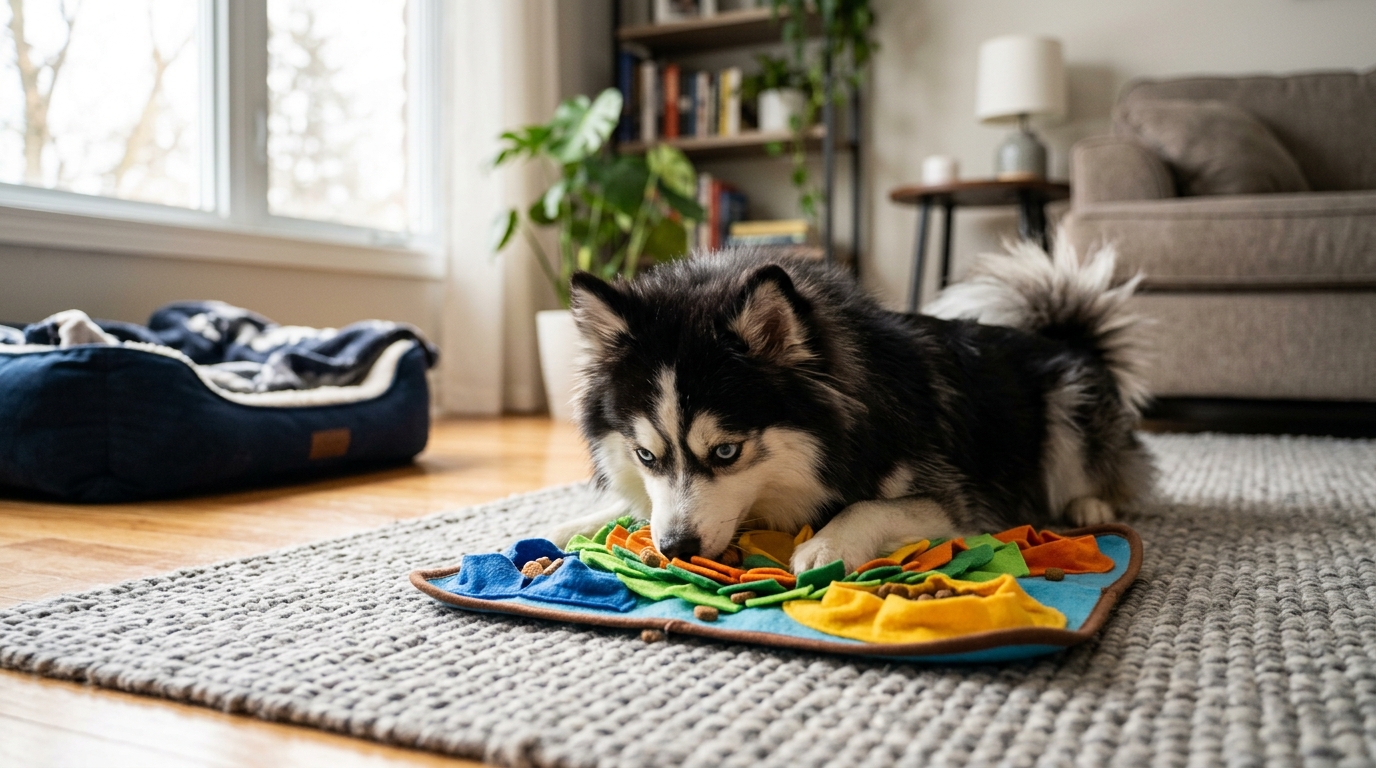
One of the easiest ways to keep your Pomsky busy is to stop using the food bowl. Instead, feed meals or treats through puzzle toys, food-dispensing toys, or a snuffle mat, so your Pomsky has to sniff, nudge, and problem-solve for every bite. The ASPCA suggests stuffing a puzzle toy with something tasty like plain yogurt, peanut butter, or their regular food, and even freezing it so the challenge lasts longer. Just make sure any peanut butter is xylitol-free, since xylitol is toxic to dogs. Rotating a few different puzzles keeps them interesting, and a frozen stuffed toy can easily occupy a Pomsky for a good chunk of the morning.
Offer Safe, Long-Lasting Chews
Chewing is a natural, soothing activity for dogs, and a good chew can keep your Pomsky happily settled for a while. Offer a safe, appropriately sized chew made for dogs, and steer clear of anything that can splinter, like cooked bones, or anything small enough to swallow. Because every dog chews differently, it is worth watching how your Pomsky handles a new chew before you leave them alone with it.
Set a Calm, Comfortable Scene
Small environmental touches help your Pomsky relax. Leave them a comfortable bed or a cozy spot to settle, and consider leaving soothing music or the TV on quietly, which the ASPCA notes can help, since a little background sound can make an empty house feel less lonely. A spot by a window can give some dogs a pleasant view, though if yours tends to bark at every passerby, a quieter room may be the better choice.
Keep Enrichment Safe
Because your Pomsky will be using these items unsupervised, safety comes first. Always try a new toy or chew while you are home before leaving your dog alone with it, so you can see whether they play with it safely or try to tear off and swallow pieces. Skip anything with small parts, and avoid homemade items like cardboard or fabric that your Pomsky might eat, since swallowed material can cause a dangerous blockage. If a toy becomes damaged, replace it, and when in doubt, choose sturdier, dog-specific products.
Plan for Longer Days
Enrichment helps, but it does not replace company. As a general guide, welfare organizations like the RSPCA recommend not leaving an adult dog alone for more than about four hours as a regular routine, and arranging for someone to check in if you will be gone longer. For a high-energy breed like the Pomsky, long daily stretches alone are hard. If your days run long, consider a midday dog walker, a drop-in visit from a friend or neighbor, or doggy daycare to break up the time and give your Pomsky a chance to move, toilet, and socialize.
When It Is More Than Boredom
If your Pomsky panics, destroys things, hurts themselves, or cannot settle even with plenty of enrichment and exercise, the problem may be separation anxiety rather than boredom. In that case, enrichment is only part of the picture, and it is worth talking to your vet or a certified behavior professional. Catching it early makes it far easier to help your dog feel safe on their own.
Final Thoughts
A happy home-alone Pomsky comes down to a bit of planning: exercise first, give them engaging food puzzles and safe chews, set a calm scene, and make sure the toys you leave out are safe. Add some help for the longer days, and your Pomsky can learn that time alone is just another part of a good day.


.svg)
.svg)