
.svg)
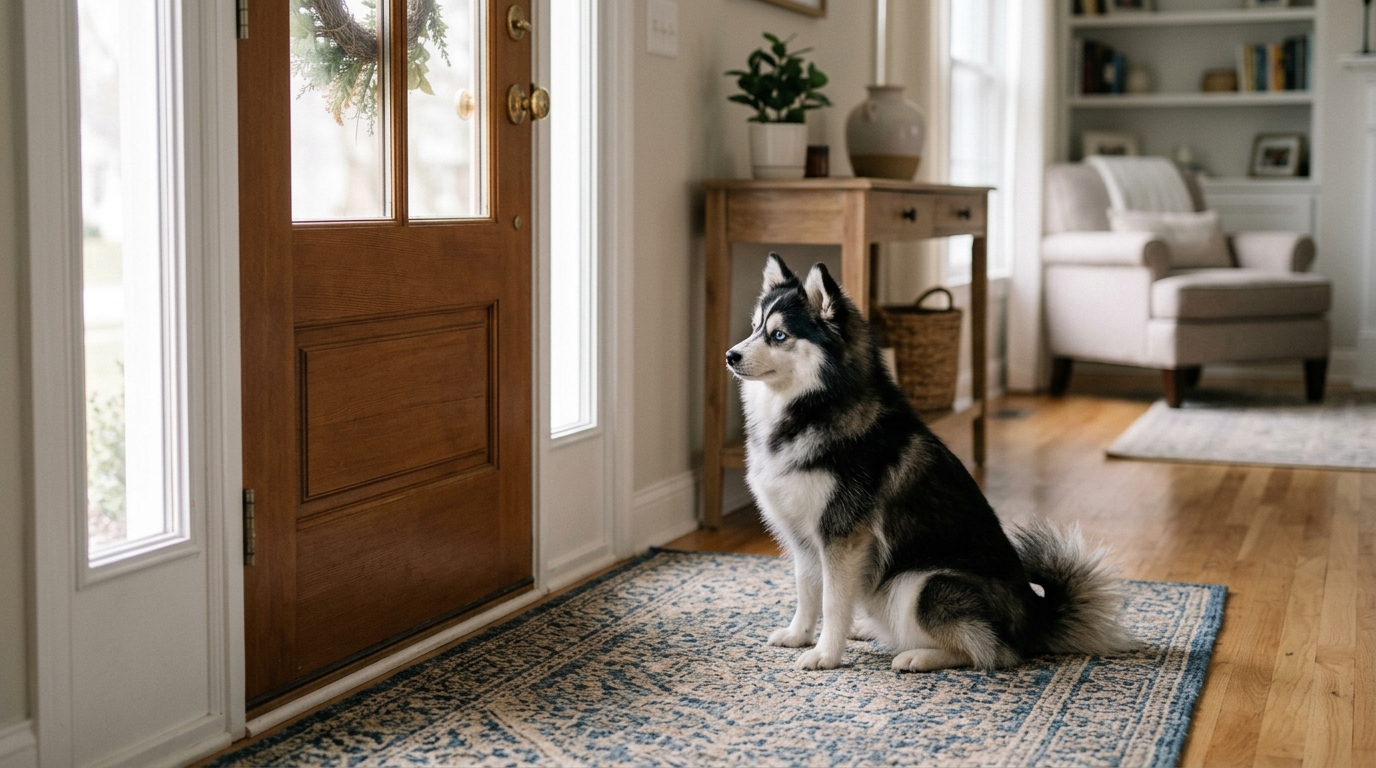
Pomskies are affectionate, people-oriented dogs, and that close bond is one of the best things about them. It can also make being left alone genuinely hard. Separation anxiety is one of the most common behavior problems in dogs, and a distressed Pomsky can bark for hours, destroy furniture, or even hurt themselves trying to escape. The good news is that with patience and the right approach, most dogs improve a great deal. Here is how to recognize it and what actually helps.
What Is Separation Anxiety?
Separation anxiety is real distress, sometimes full panic, that some dogs feel when they are apart from the people they are bonded to. The most important thing to understand is what it is not. The barking, chewing, and accidents are not your Pomsky being spiteful, stubborn, or trying to get back at you for leaving. They are the actions of a dog who is genuinely frightened and cannot cope. That shift in mindset matters, because it points you toward easing the fear rather than punishing the behavior, which only makes anxiety worse.
Signs of Separation Anxiety
Separation anxiety usually appears soon after you leave, often within the first 20 to 45 minutes. Common signs include:
• Becoming anxious or clingy as you get ready to leave
• Excessive barking, howling, or whining when alone
• Chewing, digging, or destruction, often aimed at doors and windows
• Attempts to escape, which can cause injury
• Urinating or defecating indoors despite being house-trained
• Pacing, restlessness, or excessive drooling and licking
A telltale clue is that these behaviors happen mainly or only when your Pomsky is left alone, and they settle once you return.
Rule Out Other Causes First
Before you assume separation anxiety, rule out the simpler explanations. A puppy that is not fully house-trained, a bored dog with too little exercise, or an underlying medical issue can all look similar. Accidents or chewing that happen whether or not you are home usually point to something other than separation anxiety. Because the causes overlap, it is worth having your vet examine your Pomsky to rule out medical problems and help confirm what you are actually dealing with before you start a treatment plan.
How to Help Your Pomsky?
For mild cases these steps often help on their own, and for more serious cases they work best alongside a professional plan.
1. Keep goodbyes and hellos low-key. Big, emotional departures and excited reunions raise the stakes of your coming and going. Stay calm and matter-of-fact so leaving feels like no big deal.
2. Build a positive association with alone time. Give your Pomsky something wonderful that only appears when you leave, such as a food puzzle or a stuffed, frozen Kong, and put it away when you get home. Make sure any peanut butter is xylitol-free, since xylitol is toxic to dogs. The goal is for your departure to start predicting good things.
3. Practice short absences and build up slowly. Begin with departures so brief your Pomsky stays relaxed, even just stepping out for a minute, then gradually extend the time as long as they stay calm. This gradual desensitization is the heart of treatment, and rushing it only sets you back.
4. Exercise and enrich before you go. A good walk plus some mental work, like training games or sniffing, leaves your Pomsky more ready to rest while you are out.
5. Offer a comfortable, safe space. Some dogs relax in a cozy crate, while others panic in one and can injure themselves, so use a crate only if your Pomsky genuinely likes it, and never as punishment.
When to Call a Professional
If your Pomsky's anxiety is severe, is not improving, or they are hurting themselves, bring in expert help rather than going it alone. Ask your vet for a referral and look for a certified behavior professional, such as a CCPDT-certified trainer, an IAABC consultant, or a veterinary behaviorist (DACVB). For moderate to severe cases, your vet may also recommend anti-anxiety medication as part of a broader behavior plan. The right medication does not sedate your dog, it simply lowers the fear enough for the training to work.
What Doesn't Work
A few popular ideas do more harm than good. Punishment is the big one: scolding or crating your Pomsky after the fact for chewing or accidents only deepens the fear and tends to make things worse. Getting a second dog usually does not fix it either, because the anxiety is about being apart from you, not about having company. And despite what older advice claims, separation anxiety has nothing to do with "dominance" or needing to prove you are the "pack leader." That theory has been set aside by modern behavior science, and it will not solve a fear-based problem.
Final Thoughts
Separation anxiety can be exhausting for both of you, but it is treatable. Lead with patience, not punishment: keep your exits calm, make alone time rewarding, build up slowly, and get professional help early if you need it. With consistency, most Pomskies learn that being alone is safe and that you always come back. For more Pomsky-specific support, our POA community is here to help.


.svg)
.svg)