
.svg)

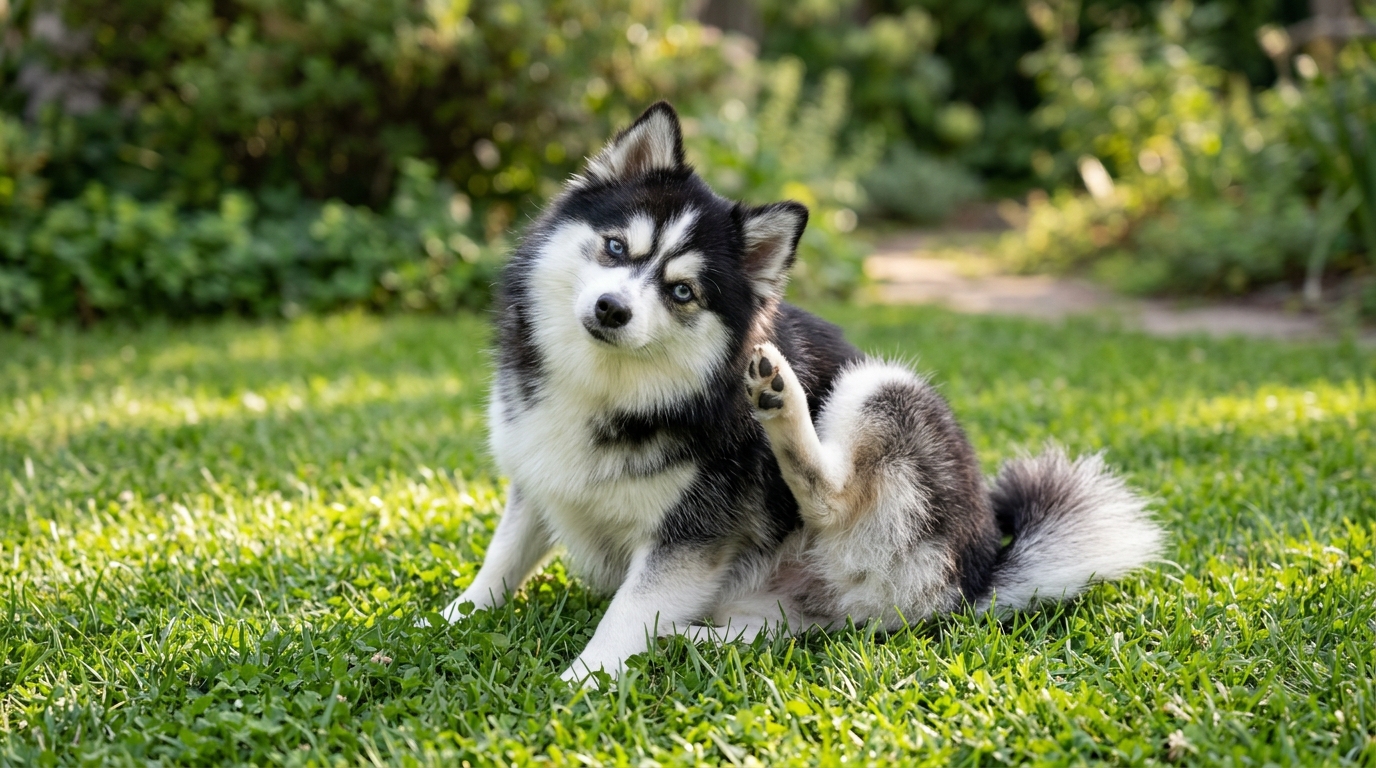
Any Pomsky owner can tell you exactly when the lightbulb moment hits. Usually it's about three months in. The fluffy fox-like puppy you brought home starts hitting her adult coat, and suddenly fur is everywhere. The couch. The car seats. Settled into the kitchen tile grout. On the black sweater you were planning to wear to dinner.
Welcome to life with a Pomeranian Husky.
The upside is that Pomsky shedding is manageable once you understand what's actually happening with the coat and which tools and habits work. The downside is that almost none of the generic dog grooming advice online applies to a Pomsky in any useful way. Pomsky coats don't behave like single-coated breeds. They behave like double-coated working dogs in much smaller bodies, which means they need their own strategy.
The Pomsky coat explained
Pomskies inherit double coats from both parents. From the Husky side comes a dense wooly undercoat designed to insulate against subzero temperatures. From the Pomeranian side comes a thick, slightly coarser outer coat that's naturally water-resistant. The two layers together create the fluff cloud Pomsky owners love. They also create the year-round shedding most people aren't ready for.
Pomskies blow their coat twice a year, in spring and again in fall. During these coat blow periods, the undercoat releases in visible clumps for two to four weeks. The rest of the year they shed steadily but at a more moderate level. Some Pomskies lean more Husky in coat behavior. Others lean more Pomeranian. F1 Pomskies tend to shed more than F2 or F1B variants, but every dog is a bit different.
The marketing claim that Pomskies are low-shedding is, in most cases, false. Stop fighting it. Once you accept that fur is now part of your daily life, the rest of the strategy gets much easier.
The biggest mistake new owners make
Don't shave a Pomsky. Please don't.
Shaving a double-coated breed in summer feels like a good idea. You're trying to keep her cool. But it actually damages the coat's temperature-regulation system, sometimes permanently. The undercoat works in both directions. It traps cold air against the skin in summer and warm air in winter. Remove that buffer and the coat often grows back patchy. Wrong texture. Sometimes barely at all.
A Pomsky doesn't need shaving. She needs brushing. The fur on the floor isn't a sign of poor care. It's the system working as designed. Your job is to capture that fur with a brush before it ends up on your couch.
How often to brush, honestly
The official advice is two or three times a week. The honest advice is every day during coat blow and four or five days a week the rest of the year. Pomsky owners who brush daily during coat blow report dramatically less fur around the house, less matting around the ears and hindquarters, and a noticeably calmer dog overall.
Five minutes a day is enough. The goal isn't a marathon session. It's consistency. A few minutes daily beats a forty-five-minute weekend battle every time, both for fur control and for her tolerance of
grooming.
Tools that actually work
Not all brushes work on a Pomsky's double coat. Most of the popular brushes you'll see in big-box pet stores are designed for short, single-coated breeds. They barely scratch the surface of a Pomsky's undercoat.
Here's what actually works:
- Undercoat rake. Non-negotiable. This pulls dead undercoat without damaging the topcoat. Use
it gently and in the direction of fur growth. - Slicker brush. Best for the outer coat and for catching loose hair after the rake has done the
deeper work. Pick one with rounded pin tips so it doesn't scratch the skin. - De-shedding tool (the Furminator style). Useful but easy to overuse. Once a week during normal
shedding is fine. Two or three times a week during coat blow is the maximum. - Pin brush for finishing. Distributes natural oils through the coat and shapes the signature
Pomsky fluff.
One newer category worth knowing about is the waterless misting brush. These tools release a fine, skin-safe mist while you brush, which dampens the loose undercoat just enough to lift it cleanly without giving your dog a full bath. ReNu makes one of the better-designed examples. Soft silicone bristles. No tugging at the topcoat. A vet-formulated cooling mist that's safe for the sensitive skin many Pomskies have. For owners who want to extend the time between full baths, and for a double-coated dog you absolutely should, a misting brush becomes part of the everyday routine instead of a once-a-month event.
Bathing: less is more
Pomskies should be bathed every six to eight weeks. Sometimes longer. Their natural coat oils are part of how the double coat insulates and repels dirt. Bathing too often strips those oils, which causes the skin to overproduce sebum in response, which then leads to more shedding, more odor, and more bathing. You'll end up in a loop that's hard to escape.
When you do bathe, use a quality dog shampoo with a balanced pH. Rinse thoroughly. Twice. Soap residue trapped in the undercoat causes itchy flaky skin that drives even more shedding. After the bath, blow the coat completely dry. Letting a Pomsky air-dry traps moisture against the skin and can cause hot spots, which take weeks to clear up.
Diet is doing more work than you realize
A Pomsky's coat reflects her diet within a few weeks. Foods rich in omega-3 fatty acids like salmon, sardines, and flaxseed visibly improve coat health and reduce excess shedding. A lot of Pomsky owners report a meaningful drop in shedding after adding a small daily serving of fish oil or switching to a fresh-food-based diet. Within four to six weeks, the difference is usually visible.
Dehydration is another quiet shedding driver. Make sure your Pomsky always has access to fresh clean water, especially in warmer months. Simple test: gently lift the skin between her shoulder blades. If it doesn't snap back immediately when you let go, she's probably under-hydrated.
Managing the household side
Even with perfect grooming, some shedding is inevitable. The trick is having systems for managing the fur once it's in the house. A good vacuum with a pet-hair attachment. A couple of rubber pet-hair brushes for the couch. A lint roller in every car. Machine-washable couch covers if you can swing it.
None of these are glamorous. Together they reduce the visible impact of Pomsky shedding by 80 or 90 percent. One quiet trick experienced Pomsky owners swear by: brush outdoors during spring and fall coat blow.
It's easier to clean up. The lighting is better for seeing what you're working with. You turn the worst three or four weeks of the year into a routine that doesn't touch the inside of your house at all.
The reality of Pomsky ownership
Owning a Pomsky means accepting that fur is now part of your life. Once you understand the coat and develop a consistent grooming routine, the daily impact becomes pretty minimal. A well-managed Pomsky should be no more shed-heavy than any other double-coated breed. Sometimes less, depending on the specific lineage.
The upside is real. That fluffy fox-like coat is one of the reasons people fall in love with the breed in the first place. Take care of it well, and you'll have a dog that turns heads on every walk for the entire twelve to fifteen years of her life. Five minutes of brushing a day is a small price for that.


.svg)
.svg)