
.svg)
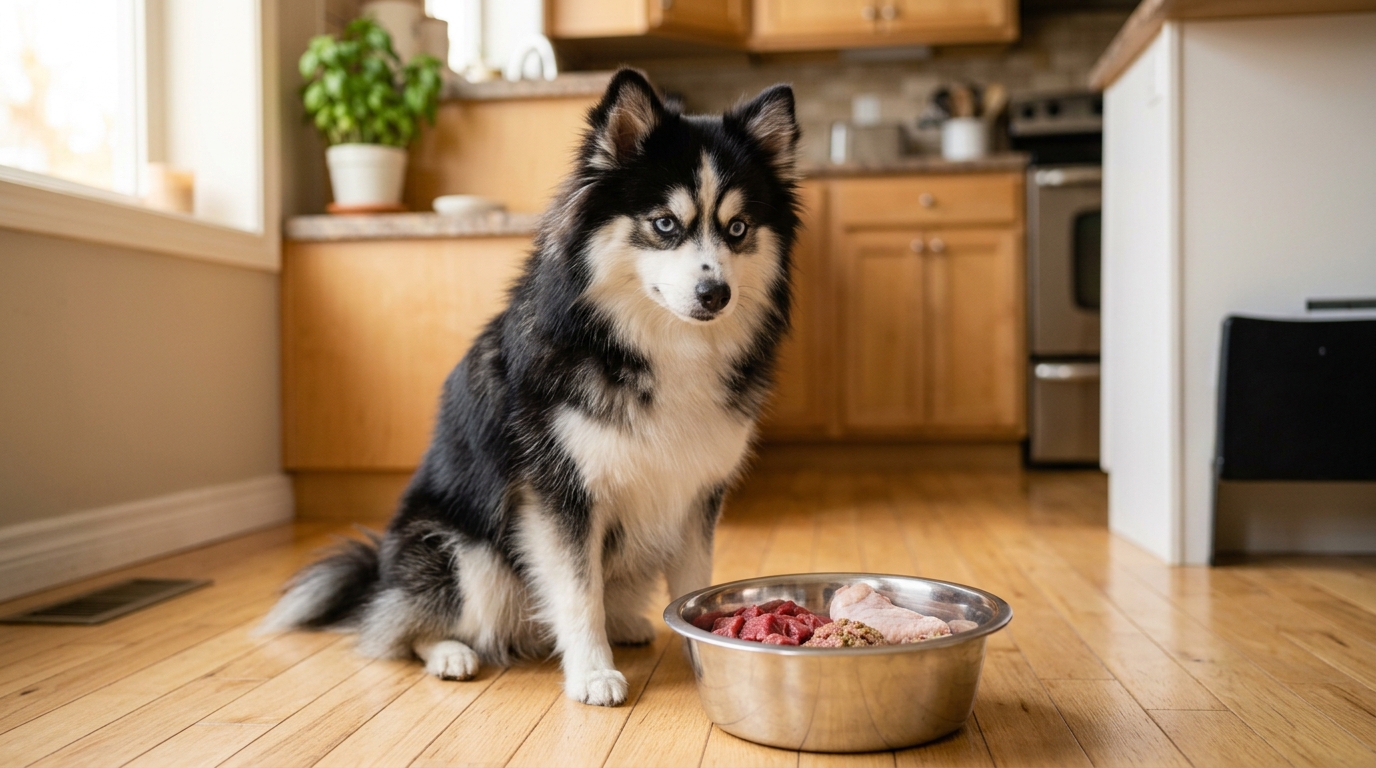
Pomskies are a spirited mix of Pomeranian and Siberian Husky. They are small in size but big in energy, appetite, and personality. That mixed heritage means their nutrition deserves a little extra thought: their activity level asks for quality protein, their double coat benefits from healthy fats, and their smaller frame means portions and food safety both matter.
Raw feeding is one of several ways to meet those needs, and plenty of owners are curious about it. It is not the only good option, and many Pomskies thrive on a high-quality kibble. The best diet is the one that works for your individual dog and that you can feed safely and consistently. If you are considering raw, here are six Pomsky-specific tips to make the transition smooth and safe.
Raw Food and Pomskies
Owners who switch to raw often report benefits like these, though results vary from dog to dog:
• Better coat and skin: raw meat provides natural fats that keep the double coat plush
• Cleaner teeth: some owners find raw meaty bones help reduce plaque, though bones carry a choking and fracture risk, so supervise
• Steady energy: whole-food protein sustains the Husky-level energy
• Smaller, firmer stools: raw diets produce less waste, which is easier on small-breed digestion
6 Raw Feeding Tips
Tip 1: Consult Your Vet Before Switching Your Pomsky to Raw
Before changing anything, book a vet visit. Your vet can confirm your Pomsky's healthy weight and calculate the right daily portion for their age, size, and activity level, which is more reliable than a generic formula. This matters for Pomskies, whose adult size varies quite a bit by generation and breeding. It is also a chance to discuss any joint or dental concerns specific to your dog.
Tip 2: How to Transition to Raw Dog Food Gradually (7 to 14 Days)
Pomskies can be prone to sensitive stomachs, so a slow transition matters more for this breed than for others. Follow this ratio:
• Days 1 to 3: 25% raw, 75% current food
• Days 4 to 7: 50% raw, 50% current food
• Days 8 to 10: 75% raw, 25% current food
• Days 11 to 14: 100% raw
If your Pomsky shows any digestive resistance, hold at the current ratio for a few extra days. This breed responds better to patience than to a hard switch.
Tip 3: Start With a Single Protein Source
Because Pomskies can inherit food sensitivities from either parent breed, introducing one protein at a time makes it much easier to spot a reaction. There is no truly safe starter protein: a 2016 review in BMC Veterinary Research found the most common food allergens in dogs were beef, dairy, chicken, and wheat, so chicken is not automatically gentle. Pick one protein, watch how your Pomsky responds, and wait until digestion is clearly settled before adding a second. If you suspect a sensitivity, your vet can help you plan an elimination approach.
Tip 4: Balance Meat, Bone, and Organ Meat (The 80/10/10 Rule)
A complete raw meal for a Pomsky follows the standard raw-feeding ratio:
• 80% muscle meat: chicken thighs, turkey breast, or beef mince
• 10% raw meaty bones: always raw, never cooked; chicken wings and necks are appropriately sized for Pomskies
• 10% organ meat: 5% liver and 5% other secreting organs like kidney or spleen
For a Pomsky, choose appropriately small, raw bones like chicken wings or necks that suit their jaw. Never feed cooked bones, which can splinter, and avoid hard weight-bearing bones like beef marrow bones, which can crack teeth in any dog. Raw bones still carry a choking and fracture risk, so supervise your dog while they eat.
Tip 5: Handle Raw Food Safely
This step protects your family as much as your dog. The American Veterinary Medical Association notes that raw animal protein can carry pathogens such as Salmonella, Campylobacter, E. coli, and Listeria, and that even a healthy-seeming dog can shed them and pose a risk to people. That risk is higher in homes with babies, elderly family members, or anyone pregnant or immunocompromised.
• Wash your hands thoroughly after handling raw food
• Clean bowls and prep surfaces after every meal
• Store raw food frozen or properly refrigerated, and never leave it sitting out
Keep an eye on your Pomsky's stools, energy, and appetite during the switch too. Firmer, smaller stools and a brief dip in appetite are normal early on, but persistent upset or low energy is worth a vet call. If anyone in your household is in a higher-risk group, talk to your vet before starting raw.
Tip 6: Choose a Trusted Raw Dog Food Brand
Sourcing and balancing raw meals from scratch takes time most owners do not have, so a complete pre-made brand is often the practical choice. Look for human-grade ingredients, clear sourcing, portioning suited to small-to-medium dogs, and a formulation created or reviewed by a veterinary nutritionist.
One brand worth a look is Ardam (formerly CDK9 Raw). Ardam makes human-grade, vet-formulated, BARF-based raw meals in its Sydney facility, portioned by your dog's weight and age. Note that Ardam currently delivers only within parts of Australia (NSW, ACT, VIC, and QLD), so check whether they reach your area. If you are outside their delivery zone, apply the same criteria above to find a complete, balanced raw brand near you.
Final Thoughts
For a Pomsky, raw feeding is about matching their small frame and lively energy with a diet that works for them, fed safely. Go slowly, introduce one protein at a time, keep the balance right, handle the food with care, and pick a brand that does the balancing for you. Whatever you choose, your vet is your best partner in getting it right.



.svg)
.svg)